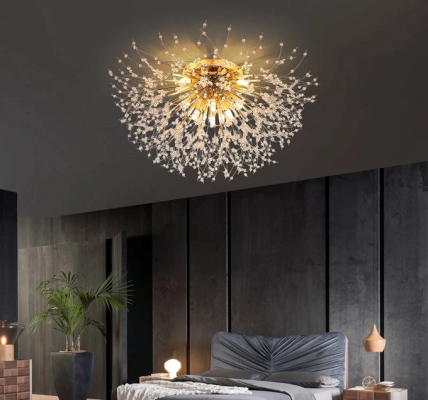
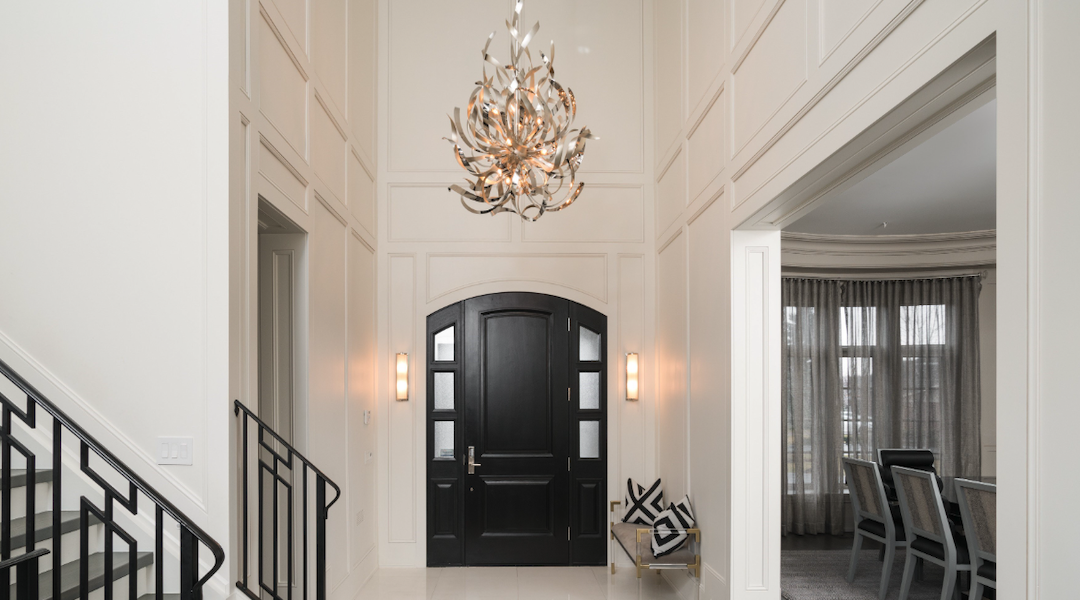

The entryway of a building, particularly one of significant scale, serves as a crucial transitional space. It is the first interior impression a visitor receives, a prelude to the architectural narrative that unfolds beyond. Within this context, lighting plays a pivotal role, shaping perception, guiding movement, and establishing atmosphere. Elegant chandelier lighting, in particular, transcends mere illumination; it becomes a focal point, an architectural embellishment that contributes to the overall grandeur and character of the space.
Historical Precedents and Evolution
The concept of a central, decorative light Lamolighting fixture in a large space is not a contemporary invention. Early forms of chandeliers, albeit simpler, existed in various cultures throughout history.
From Candlesticks to Gaslight
Initially, chandeliers comprised multiple arms holding candles. These served as practical light sources, amplifying the limited illumination available before the advent of electricity. Materials like wrought iron, bronze, and wood were common. As technology progressed, gas lighting introduced a new era, with chandeliers designed to incorporate gas jets, often featuring intricate glass elements to diffuse the flame.
The Electric Revolution
The introduction of incandescent light bulbs transformed chandelier design. No longer constrained by open flames, designers could explore more elaborate structures, utilizing a wider array of materials and forms. Crystal, a material admired for its refractive properties, became a dominant feature, allowing for exquisite displays of light. The ability to control individual bulbs also introduced greater versatility in illumination.
Design Considerations for Grand Entryways
Selecting appropriate chandelier lighting for a grand entryway requires a systematic approach, taking into account several architectural and aesthetic factors. The chandelier is not an isolated element; its effectiveness depends on its integration within the larger design scheme.
Scale and Proportion
One of the most critical aspects is ensuring the chandelier’s scale is commensurate with the entryway’s dimensions. An undersized fixture will appear lost, while an oversized one can dominate and overwhelm the space.
Ceiling Height and Diameter
A general guideline suggests that for every foot of ceiling height, the chandelier’s height should be approximately three inches. For instance, a 20-foot ceiling might accommodate a chandelier around 60 inches tall. The diameter often relates to the entryway’s width; a common recommendation is that the diameter in inches should roughly equal the sum of the room’s length and width in feet. This is a starting point, however, as the visual weight of the chandelier – its perceived bulk – also factors into proportion. A crystal chandelier, despite its physical size, might appear lighter than a solid metal fixture of the same dimensions.
Architectural Style and Cohesion
The chandelier should complement the existing architectural style of the entryway and the broader building. A starkly modern chandelier in a classical revival entryway, or vice versa, can create a jarring incongruity.
Classical and Traditional Styles
Entryways featuring classical elements—columns, ornate moldings, intricate plasterwork—often benefit from chandeliers with traditional designs. These might include multi-tiered crystal chandeliers, bronze or brass fixtures with elaborate scrollwork, or designs incorporating elements like acanthus leaves or neoclassical motifs. The emphasis is on intricate detail and a sense of enduring elegance.
Modern and Contemporary Styles
For entryways characterized by clean lines, minimalist aesthetics, and open spaces, modern or contemporary chandeliers are more suitable. These can range from geometric designs in polished chrome or brushed nickel to abstract forms crafted from glass or unadorned metal. The focus here is on form, material, and often, an understated elegance that relies on precise execution rather than overt ornamentation.
Transitional Styles
Transitional entryways, which blend elements of both traditional and modern design, offer greater flexibility. Chandeliers in this category often feature simplified traditional forms or incorporate contemporary materials into classic silhouettes. They bridge the gap, offering a sense of freshness while respecting traditional architectural language.
Types of Elegant Chandelier Lighting
The vast array of chandelier designs can be categorized by their material composition, structural form, and primary aesthetic. Understanding these types aids in informed selection.
Crystal Chandeliers
Crystal remains a quintessential material for elegant chandeliers, celebrated for its ability to refract and disperse light into a dazzling spectrum. The quality and cut of the crystal significantly impact its visual effect.
Beveled Crystal
Beveled crystal features flat surfaces cut at angles, creating sharp facets that maximize light reflection. This produces a brilliant, sparkling effect and is often associated with formal and grandiose settings. Lead crystal, known for its high refractive index, is a premium choice.
Uncut Crystal and Art Glass
Beyond traditional cut crystal, chandeliers incorporating uncut or minimally processed crystal, often in organic forms, can offer a more contemporary take on the material. Art glass, with its diverse colors, textures, and blowing techniques, provides another avenue for unique crystal-like illumination, offering a softer, more diffused glow than aggressively faceted crystal.
Metal Chandeliers
Metal, whether polished, brushed, or patinated, forms the structural backbone of most chandeliers and can also be the dominant aesthetic element.
Bronze and Brass Fixtures
Bronze and brass, often patinated to achieve a rich, aged appearance, are staples in traditional and classical chandeliers. These metals lend a sense of permanence and gravitas, complementing wood finishes and warm color palettes.
Polished Chrome and Brushed Nickel
For modern and contemporary entryways, polished chrome and brushed nickel offer a sleek, reflective, or subtly textured finish. These metals contribute to a cleaner, brighter aesthetic and pair well with cool color schemes and minimalist décor.
Wrought Iron
Wrought iron chandeliers, characterized by their robust, often handcrafted appearance, evoke a sense of rustic elegance or medieval grandeur. They are particularly well-suited for entryways with exposed stone, heavy timber, or a more industrial-chic aesthetic.
Glass and Acrylic Chandeliers
While crystal is a form of glass, this category refers to chandeliers where non-crystalline glass or acrylic is the primary decorative element, often in larger, sculpted forms.
Blown Glass Elements
Artisanal blown glass, often in organic shapes or vibrant colors, can create dramatic and unique chandeliers. These fixtures often serve as sculptural art pieces in themselves, transforming light into an artistic expression.
Acrylic and Polycarbonate
Modern advancements in materials have introduced high-quality acrylic and polycarbonate as alternatives to glass or crystal. These materials offer durability, lighter weight, and often more design flexibility, allowing for innovative shapes and structures that might be impractical with traditional glass. They can mimic the appearance of glass or crystal at a potentially lower cost.
Illumination and Ambiance
The primary function of any lighting fixture is illumination, but in an elegant entryway, the quality and character of that light are paramount to establishing the desired ambiance.
Light Output and Brightness
The wattage or lumen output of the chandelier must be adequate for the size of the entryway. A grand entryway typically requires a significant amount of ambient light. However, “brightness” is not merely about intensity; it’s about the perceived luminosity and how it interacts with the space.
Layered Lighting Approach
Rather than relying solely on the chandelier for all illumination, a layered lighting approach is often more effective. The chandelier provides ambient light and a central visual statement. This can be complemented by wall sconces for accent lighting, recessed ceiling lights for additional fill light, or even floor lamps strategically placed to highlight architectural features or artwork. This layering allows for greater control over the mood and functionality of the space.
Color Temperature
The color temperature of the light source, measured in Kelvin (K), influences the warmth or coolness of the illuminated space.
Warm White (2700K-3000K)
Warm white light, reminiscent of incandescent bulbs, often creates a welcoming, intimate, and traditional atmosphere. It enhances warm color palettes and richly textured materials like wood and bronze.
Neutral White (3500K-4000K)
Neutral white light offers a balanced, clear illumination, suitable for a wide range of styles. It provides good color rendition without leaning too heavily towards warm or cool.
Cool White (5000K+)
Cool white light, a more modern aesthetic, can make spaces feel brighter and more vibrant. It pairs well with contemporary designs, chrome finishes, and crisp color schemes. However, in an entryway designed for warmth and welcome, it can sometimes feel sterile.
Dimming Capabilities
Incorporating dimming capabilities is crucial for versatility. The ability to adjust the light intensity allows the entryway to adapt to different scenarios, from brightly lit daytime welcoming to a softer, more subdued evening ambiance. This flexibility enhances the overall user experience and artistic control.
Installation and Maintenance
The successful implementation of an elegant chandelier in a grand entryway extends beyond selection to proper installation and ongoing care.
Structural Reinforcement
Grand chandeliers, especially those constructed from heavy materials like crystal and metal, can be substantial. It is imperative that the ceiling structure can adequately support the weight.
Professional Assessment
Before installation, a structural engineer or a qualified contractor should assess the ceiling’s load-bearing capacity. If necessary, additional reinforcement, such as blocking between joists or a dedicated support beam, must be installed. This is not an area for compromise, as a falling chandelier presents significant safety hazards.
Electrical Requirements
The electrical wiring must be sufficient to handle the chandelier’s power demands, and proper grounding is essential.
Dedicated Circuitry
For very large or complex chandeliers, a dedicated electrical circuit may be advisable to prevent overloading and ensure reliable operation. Proper wiring and connections are critical for both functionality and safety.
Cleaning and Care
Regular maintenance is necessary to preserve the beauty and functionality of an elegant chandelier.
Dusting and Gentle Cleaning
Dust accumulation can dull the appearance of crystal and metal. Regular dusting with a soft, lint-free cloth or a specialized duster is recommended. For deeper cleaning of crystal, specialized cleaning solutions and methods are available, often involving careful disassembly of individual crystal strands for hand cleaning. Metal components may require specific polishes or cleaners depending on their finish to avoid damage. Always consult the manufacturer’s instructions for specific cleaning recommendations.
Bulb Replacement
Selecting the correct type and wattage of replacement bulbs is important. Modern chandeliers often utilize LED bulbs, which offer energy efficiency and a long lifespan. When replacing, ensure consistency in color temperature for a uniform appearance unless a specific artistic effect is desired.
To conclude, an elegant chandelier in a grand entryway is more than a mere luminaire; it is a declaration, a welcoming embrace, and a reflection of the architectural spirit. Its selection requires careful consideration of scale, style, and illumination, ensuring that it harmonizes with its surroundings and fulfills its role as a magnificent focal point. Like a well-composed overture, it sets the tone for the entire composition that follows.