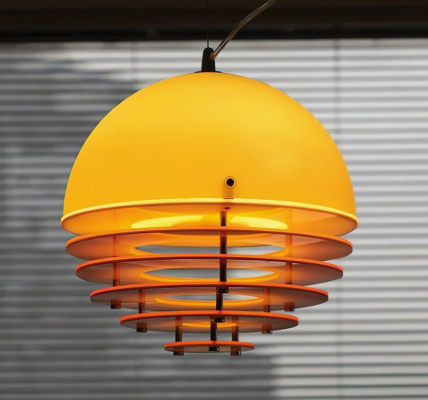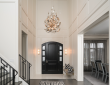
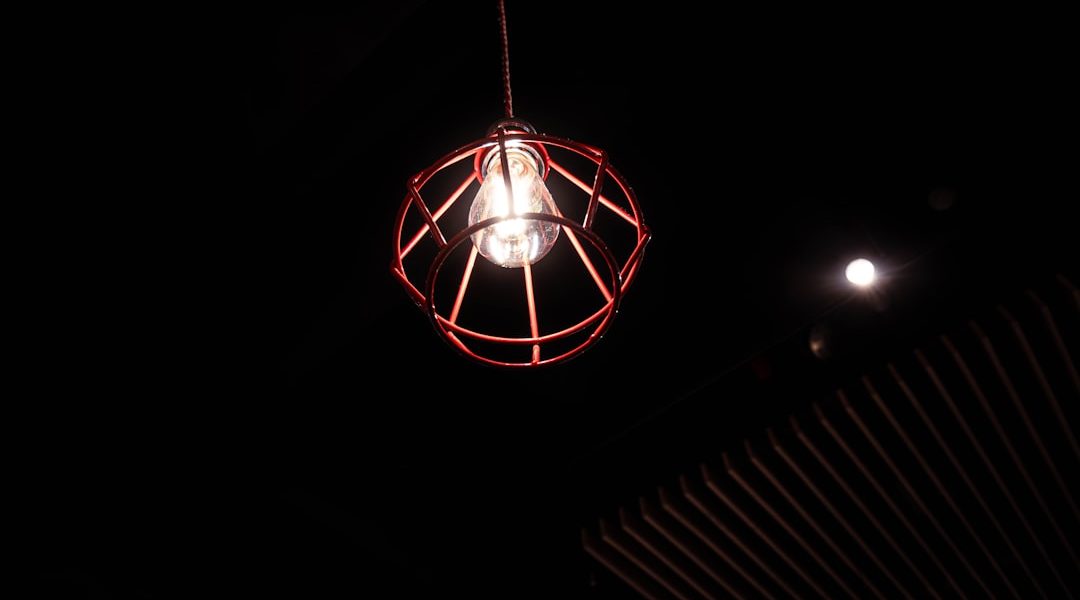

The “Retro-futuristic Sunset Orb Hanging Light” (referred to hereinafter as the “Sunset Orb”) represents a modern interpretation of design principles rooted in both historical and speculative aesthetics. This article examines its design elements, functional application, historical context, manufacturing processes, and potential impact on contemporary interior design.
The Sunset Orb’s design integrates elements from disparate aesthetic movements. Its core philosophy centers on a synthesis of past technological optimism with contemporary material science and manufacturing capabilities.
Mid-Century Modern Influences
The spherical form of the Sunset Orb draws heavily from mid-century modern design. This period, roughly spanning from the mid-1930s to the mid-1960s, favored organic shapes, functional simplicity, and a belief in the power of design to improve daily life. You, as an observer of design, might recognize echoes of iconic spherical lamps Danvildesigns from designers like George Nelson or Poul Henningsen, albeit recontextualized. The emphasis on clean lines and unadorned surfaces reflects this era’s rejection of pre-war ornamentation.
Retro-futurism as a Guiding Principle
Retro-futurism, the predominant aesthetic driver for the Sunset Orb, is a genre that depicts future visions from earlier eras. It is characterized by a romanticized view of space exploration, advanced technology, and utopian societies. Think of the atomic age, with its fascination with rockets, flying cars, and alien landscapes. The Sunset Orb, with its singular, glowing sphere, evokes the imagery of celestial bodies, space capsules, or the sun itself viewed through a filtered lens. This aesthetic seeks to elicit nostalgia for a future that never quite arrived, offering a sense of playful optimism.
Contemporary Minimalism
Despite its retro leanings, the Sunset Orb also incorporates contemporary minimalist principles. The absence of extraneous decorative elements, the focus on a single, dominant form, and the streamlined suspension system all align with modern design sensibilities. This blending allows the light to transcend a purely nostalgic appeal and integrate into diverse contemporary interiors. It speaks to a desire for simplicity in an increasingly complex world.
Functional Aspects and Illumination Characteristics
Beyond its aesthetic appeal, the Sunset Orb is designed to serve a primary function: illumination. Its functional characteristics are as carefully considered as its visual presence.
Light Diffusion and Quality
The material choices for the orb’s shell are crucial for light diffusion. Typically crafted from frosted or opaline acrylic or glass, these materials scatter light evenly, reducing harsh glare and creating a soft, ambient glow. This quality of light is often described as “warm” or “inviting,” suitable for creating a comfortable atmosphere rather than bright, task-oriented illumination. Consider it a gentle caress of light, rather than a direct beam.
Adjustable Brightness and Color Temperature
Many iterations of the Sunset Orb feature dimmable LED technology. This allows the user to adjust the light output from a subtle glow to a more pronounced illumination, adapting to various moods or activities. Furthermore, some models offer adjustable color temperature, ranging from warm white (around 2700K) to cooler white (around 5000K). This flexibility makes the fixture more versatile, allowing it to complement different interior color palettes and personal preferences. You, as the user, gain agency over your immediate environment.
Suspension and Placement Considerations
The hanging mechanism of the Sunset Orb is typically a slender cable or rod, reinforcing its minimalist aesthetic. The height of its suspension is often adjustable, allowing for versatility in placement over dining tables, in stairwells, or as a focal point in living areas. Its spherical form makes it equally appealing from all angles, making it suitable for open-plan spaces where it might be viewed from multiple perspectives.
Materials and Manufacturing Processes
The construction of the Sunset Orb relies on a combination of traditional craftsmanship and modern industrial techniques.
Core Materials
The primary materials employed in the construction of the orb itself are typically:
- Acrylic (Polymethyl Methacrylate – PMMA): A lightweight, shatter-resistant, and easily moldable thermoplastic. Its optical clarity can be controlled to achieve various levels of diffusion.
- Glass (Opaline or Frosted): Offers a more traditional aesthetic and, when treated, exemplary light diffusion. However, it is heavier and more fragile than acrylic.
- Metal (Steel or Aluminum): Used for the suspension system, canopy, and internal structural components. These metals provide durability and strength, often finished with powder coating or polished treatments.
Fabrication Techniques
The manufacturing process involves several key steps:
- Molding (for Acrylic/Glass): Acrylic or glass spheres are typically produced through injection molding or blow molding techniques to achieve a seamless, uniform shape. This requires precision tooling to ensure consistent wall thickness and optical properties.
- Metalworking: Suspension rods, ceiling canopies, and internal mounts are fabricated using processes such as turning, milling, and welding of steel or aluminum. Surface finishes are then applied for aesthetic appeal and corrosion resistance.
- LED Integration: Modern versions of the Sunset Orb integrate energy-efficient LED modules. These require careful thermal management to ensure longevity and consistent light output. Components are typically surface-mounted onto circuit boards and carefully positioned within the sphere to provide even illumination.
- Assembly and Quality Control: Final assembly involves meticulously integrating the light source, diffusion orb, and suspension components. Rigorous quality control checks are performed to ensure electrical safety, structural integrity, and aesthetic perfection. You, as the end-user, should expect a product that meets these standards.
Historical Context and Design Evolution
The Sunset Orb, while distinctly contemporary, stands on the shoulders of historical design precedents and technological advancements. Its evolution is a testament to iterative design.
Early Spherical Lighting Designs
Spherical lighting fixtures have a protracted history. Early examples often involved glass globes housing incandescent bulbs, primarily serving a functional purpose in public spaces or industrial settings. The advent of electricity and mass production allowed for broader experimentation with form. The simple, geometric purity of a sphere has always held an appeal for designers seeking fundamental shapes.
The Influence of Space Age Design
The 1950s and 1960s, driven by the Space Race, spurred a distinctive “Space Age” design idiom. This era saw an explosion of designs incorporating aerodynamic shapes, reflective surfaces, and materials previously associated with aerospace. The sphere, evocative of planets, Sputnik satellites, and command modules, became a potent symbol. The Sunset Orb taps into this visual language, reinterpreting it for a modern context. It is a subtle nod to a future we once imagined.
The Role of LED Technology
The widespread adoption of LED (Light Emitting Diode) technology has been a game-changer for lighting design. LEDs offer unparalleled energy efficiency, durability, and a compact size that allows for greater design freedom. For the Sunset Orb, LEDs permit a smaller, more discreet light source within the sphere, maintaining the clean lines and allowing the orb itself to be the dominant visual element. Moreover, the low heat output of LEDs makes them ideal for enclosed fixtures like the Sunset Orb, preventing heat damage to materials.
Impact and Cultural Significance
The Retro-futuristic Sunset Orb Hanging Light is more than a mere lighting fixture; it contributes to broader design discourse and shapes spatial experiences.
Redefining Contemporary Aesthetics
The Sunset Orb represents a trend in contemporary design that synthesizes historical reverence with forward-looking innovation. It exemplifies “new nostalgia,” where designers selectively borrow from the past, not in literal reproduction, but in stylistic reinvention. This approach allows the design to feel both familiar and novel, comforting yet exciting. It challenges the notion that new design must entirely break from the past.
Creating Ambience and Mood
Beyond its utility, the Sunset Orb is a powerful tool for mood creation. Its soft, diffused light, often described as having a sunset-like warmth, contributes significantly to the atmosphere of a room. It can transform a utilitarian space into a sanctuary, a stark environment into an inviting one. You, the inhabitant, are subtly influenced by this carefully curated illumination. It functions almost like a discreet celestial body within your home.
Cultural Resonance and Iconography
The spherical form itself carries deep cultural resonance, symbolizing wholeness, unity, and the cosmos across various civilizations. When combined with retro-futuristic styling, the Sunset Orb taps into collective memories of optimism regarding technological progress and space exploration. It becomes a small, personal icon, a miniature representation of grander ideas – a beacon from a hopeful past directed towards a stylish present. This object, in its quiet way, tells a story.
In conclusion, the Retro-futuristic Sunset Orb Hanging Light is a thoughtfully designed fixture that marries form and function through a sophisticated synthesis of aesthetic principles. Its roots in mid-century modernism and retro-futurism, combined with contemporary manufacturing and LED technology, result in a highly versatile and aesthetically compelling object. Its impact extends beyond mere illumination, shaping the ambiance of spaces and contributing to a broader dialogue about design, history, and the future.